
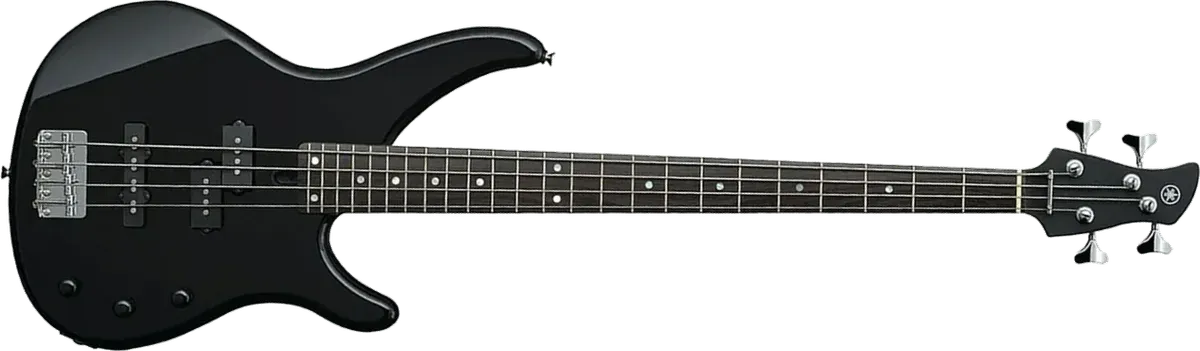
Yamaha TRBX174
The highest rating here, two pickups for more sounds, and no battery to run flat.
Check price on AmazonWhat owners say about setup on day one, the first months of practice and the years after, and which bass fits your hands and your budget.
Heads up: we earn a commission if you buy through our Amazon links, at no cost to you. It never decides our picks. Affiliate disclosure
The highest rating here, two pickups for more sounds, and no battery to run flat.
Check price on Amazon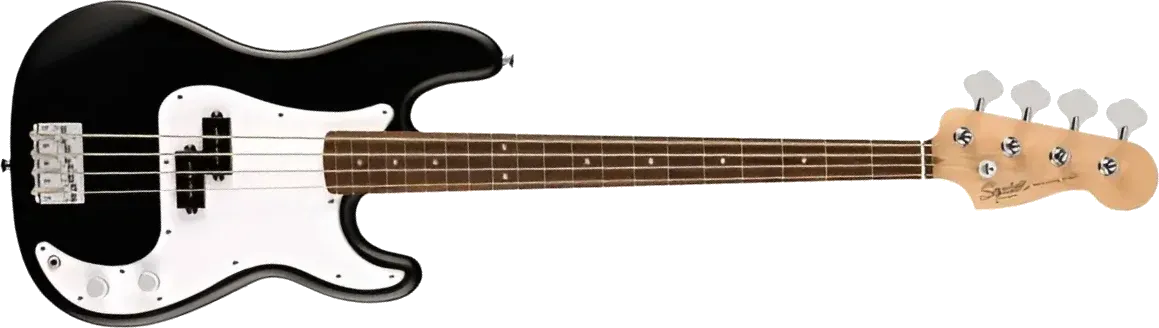
The best-selling bass on Amazon, a real P-bass sound for little money, and a 2-year warranty.
Check price on Amazon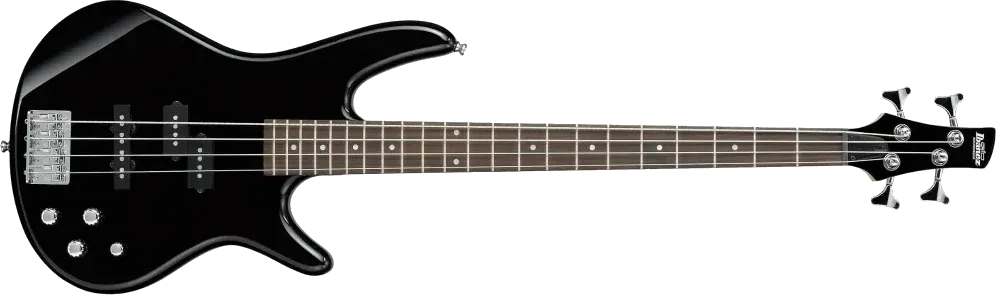
The most Amazon ratings here, a thin fast neck, and a bass boost knob for extra low end.
Check price on Amazon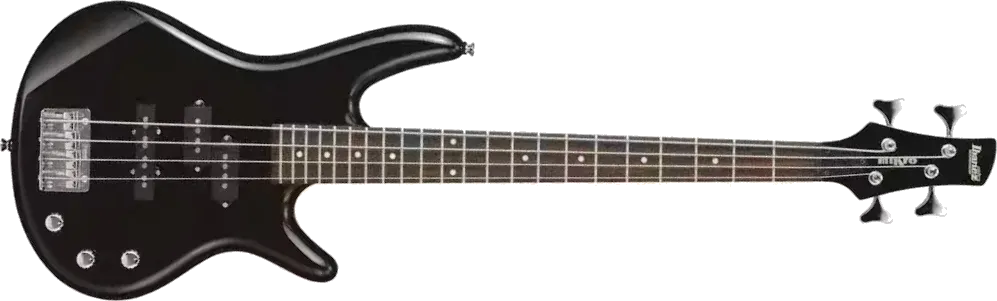
A short 28.6-inch scale, about 7 pounds, and balanced so the neck doesn't drop.
Check price on AmazonJump to: Yamaha TRBX174 · Squier Debut Series Precision Bass · Ibanez GIO GSR200 · Ibanez miKro GSRM20
| Pick | Best for | Pickups | Scale | Most-cited gripe | Owner rating |
|---|---|---|---|---|---|
| Yamaha TRBX174 | Most beginners | P/J | 34 in | Sharp fret ends over time | 4.7 (1,083) |
| Squier Debut Series Precision Bass | Tight budgets | P | 34 in | Sharp fret ends | 4.5 (1,339) |
| Ibanez GIO GSR200 | Tone tweakers | P/J + boost | 34 in | Setup out of the box | 4.6 (2,029) |
| Ibanez miKro GSRM20 | Kids and small hands | P/J | 28.6 in | Small setup tweaks | 4.5 (375) |
Ratings checked on Amazon on October 20, 2026. They change over time.
The verdict: The TRBX174 is the bass we'd buy for most beginners. It has 4.7 stars from 1,083 Amazon ratings, the best score of the four. It pairs a Precision-style pickup with a Jazz-style one, so you get the round, thumpy P sound and a brighter, tighter J sound from the same bass. The electronics are passive, so there's no battery to replace. Owners call it well made and say it sounds powerful for a bass without active electronics. One player who owns several pricier basses says it plays and sounds just as good.
Two owners say the setup was close to perfect out of the box, with smooth fret ends. Another bass arrived with the strings so slack the tuner couldn't read them, and they kept going flat for a couple of days until they settled.
The one long-term report is mixed. Four years in, an owner updated their review: the fret ends felt sharp, the neck had bowed a little, and the saddles were out of adjustment. A luthier fixed all of it in about thirty minutes, and the owner now plays it at church. They also swapped the plastic jack plate for a metal one.
How often each theme comes up across owner reviews and forum threads.
Day one
Most owners tuned it and played. One had to retune for a couple of days while new strings stretched.
Years in
One owner needed the fret ends filed, the neck adjusted and the saddles reset after four years.
The verdict: The Debut Precision Bass is Squier's cheapest P bass, and it sits at number one among electric basses on Amazon. It has one split pickup with a volume and a tone knob, the simple layout that has been on records for decades. All eight of its top reviews call it a great value, and several come from players with 20 to 40 years behind them. One plays it with a church worship team and says nobody guessed how cheap it was. The neck is slim (one owner measured 38 mm at the nut), the body is light, and the warranty is two years, the longest here.
The savings show up in the finishing. Three of the eight reviews mention sharp fret ends, and one owner scratched a finger after five minutes of playing. They filed the ends smooth with a nail file in ten minutes, but a beginner might not know to do that. Two other owners say their frets were perfect. Three call the factory strings rough and replaced them.
Setup varies too. Most owners found it playable out of the box. One bass had a flat neck, high saddles and a badly cut nut, and the owner says a beginner would have needed a shop setup to play it. Bundles with an amp and a gig bag are sold too, but one owner says the bag was for a guitar and didn't fit the bass, and the amp "sounds like a bedside alarm clock." Buying the bass alone and a proper amp makes more sense.
How often each theme comes up across owner reviews and forum threads.
Day one
Run a hand along the edge of the neck. Several owners found sharp fret ends, and one bass needed a full setup.
First weeks
Owners swap the factory strings early. One shielded the cavity to stop a hum.
The verdict: The GSR200 has been a first bass for a long time, and it has the most Amazon ratings of the four, 2,029 of them. Like the Yamaha it has P and J pickups, plus a fourth knob called Phat II that boosts the low end. One owner says turning it up added the richest bass tone without losing mids or treble. The neck is thin and fast with a satin back, and owners call the body light. A player with 60 years on bass says it plays better than their 1976 Rickenbacker.
Setup is the main complaint. Three of the top eight reviews say it needed work out of the box. One owner found the strings almost 10 mm off the fretboard at the 12th fret and the tuning sharp, and wrote that a beginner would struggle with it as it came. Another found the neck curve and one saddle wrong despite a factory inspection tag. The truss rod wrench comes in the box, and the manual covers neck adjustment.
The bass boost runs on a 9V battery, and the battery only switches on when a cable is plugged in. Reddit owners report batteries draining because they left the cable in, and older threads describe a GSR200 going silent until the battery was replaced. Some owners still have theirs 15 or 20 years later.
How often each theme comes up across owner reviews and forum threads.
Day one
Several owners had to lower the strings, adjust the neck and set the intonation before it played well.
First months
Unplug the cable when you stop playing. A plugged-in cable keeps the battery running.
Years in
Reddit owners still play theirs 15 to 20 years on. One reports a warped neck.
The verdict: The miKro is the short-scale bass owners recommend for small hands. Its 28.6-inch scale is more than five inches shorter than a standard bass, so the frets sit closer together. A beginner who struggled to reach notes on a full-size Ibanez says what was hard "suddenly became incredibly easy." One buyer got one for a 5-foot young woman who had been trying to learn on a full-size P bass, and she hasn't put it down. It weighs about 7 pounds and owners say it's balanced, with no neck dive (when the headstock drops toward the floor).
Experienced players like it too. Two owners with 35 and 60 years of playing own one, and one of them takes it to gigs after a full-size bass started to hurt their shoulder and arthritic hand. The P and J pickups give it a range of sounds. One owner calls the tone coarse and growly with a booming low end, less clear than a 34-inch bass.
Small setup fixes come up: a neck with no relief, a slight intonation issue, a high action. One owner's bass started crackling when they touched the knobs after a while. Another bought a refurbished one with bad soldering and says to buy new.
How often each theme comes up across owner reviews and forum threads.
Day one
One owner gave the neck a quarter turn because it had no relief. Others had a slightly high action or intonation to fix.
Over time
One owner's controls started to crackle when touched.
All four basses here are built for people starting out. They differ in sound, size and how much setup they need before they play easily. The right one depends mostly on the size of your hands and the sound you’re after. It also helps to know whether you’re willing to make small adjustments yourself.
Scale length is the distance the strings vibrate, from the nut to the bridge. Most basses use 34 inches, and that’s right for most teens and adults. Short-scale basses, around 28 to 30 inches, put the frets closer together, which helps kids, smaller players and anyone with wrist or shoulder pain. They tend to sound a bit boomier.
A P (Precision) pickup gives the round, thumpy sound heard on rock, pop, soul and country records. A J (Jazz) pickup near the bridge sounds brighter and tighter, which helps with funk and faster lines. A bass marked P/J has both, so you can blend them and cover more styles.
Passive basses need no battery. Active electronics, like the bass boost on the GSR200, run on a 9V battery and give you more control over the low end. The battery usually turns on when a cable is plugged in, so unplug it when you’re done.
Budget basses can arrive with high strings, a neck that needs adjusting, or sharp fret ends. Owner reviews show that every pick here can play fine out of the box, but not every time. If notes are hard to press, a string buzzes or the fret ends feel sharp, a basic setup at a guitar shop usually fixes it.
In the first weeks, often yes. You play one note at a time instead of chords, so simple songs come quickly. The strings are thicker and the neck is longer, though, so your hands work harder, and a short-scale bass like the miKro helps if reach is a problem.
A bass amp or a headphone amp, a cable, a tuner and a strap. A small bass practice amp is enough at home. One owner found the tiny amp in a bundle useless for bass, so buy a real bass amp if you can.
A 4-string. Most lessons and songs are written for four strings, and the neck is narrower. You can move to five strings later if your music needs the extra low notes.
Passive is simpler. There's no battery to forget. The GSR200 adds an active bass boost that runs on a 9V battery, which owners like for the extra low end but which drains if you leave the cable plugged in.
Often it helps. Owners of all four basses report some that arrived ready to play and others with high strings, a neck that needed adjusting or sharp fret ends. A basic setup at a guitar shop makes a budget bass much easier to play.