Digital piano vs keyboard: what's the difference, and which should you buy?
A digital piano is built to feel like a piano, and a keyboard is built to do a bit of everything. The names aren't regulated, though, so check the spec that matters most: 88 weighted keys.
 By Douglas MatosoUpdated
Heads up: we earn a commission if you buy through our Amazon links, at no cost to you. It never decides our picks. Affiliate disclosure
The short answer
A digital piano has 88 weighted keys that push back like an acoustic piano's, and its sounds center on piano. A keyboard usually has 61 or 76 light keys, hundreds of sounds and built-in backing rhythms, and it's easier to carry. If you want to learn piano, buy a digital piano with 88 weighted keys. If you want sounds, rhythms and portability, or you're buying for a young child who's just exploring, a keyboard is the better fit. If you already own a keyboard, start on it and upgrade when you know you'll stick with it.
Side by side
| Digital piano | Keyboard | MIDI keyboard | |
|---|---|---|---|
| Keys | Almost always 88 | Usually 61 or 76 | 25 to 88 |
| Key feel | Weighted, usually heavier in the bass | Light and springy, often touch-sensitive | Usually light and springy |
| Sounds | A good piano, plus a few others | Hundreds, with a thinner piano | None without a computer or tablet |
| Backing rhythms | Rare | Standard on most models | None |
| Weight | About 25 lb and up | About 8 to 15 lb | Light enough for a desk |
| Best for | Piano lessons and piano music | Trying out sounds, singing along, kids, travel | Making beats and recording on a computer |
The names don’t tell you much
A digital piano is meant to replace an acoustic piano. A keyboard is an electronic instrument that happens to have piano-style keys and can sound like almost anything. That’s the difference as Yamaha, which makes both, describes it: digital pianos go after the sound and feel of an acoustic, and keyboards go after variety and portability.
Nobody regulates these words, though. When a beginner asked r/piano for the difference, one of the top answers was “Marketing. And some functionality.” The Alesis Recital is sold as a digital piano, yet its keys are semi-weighted and it weighs less than 16 pounds. The Donner DEP-20 has fully weighted keys, and it also has 238 sounds. Another commenter wished the terms were stricter, “because I’m sure there are people that have bought ‘digital pianos’ and gotten a keyboard with no weighted keys or velocity sensing.”
So skip the product name and read the spec sheet. Three things matter: how many keys it has, what the listing says about the key action, and what’s built in.
The real difference: weighted vs unweighted keys
Weighted keys
The keys on an acoustic piano are heavy because each one swings a hammer at a string. Weighted keys copy that with a hammer-like mechanism inside. Most are graded too, which means heavier in the bass and lighter in the treble, like a real piano. Listings call this weighted, hammer action or graded hammer action. The Yamaha P71, Roland FP-10 and Donner DEP-20 are all weighted.
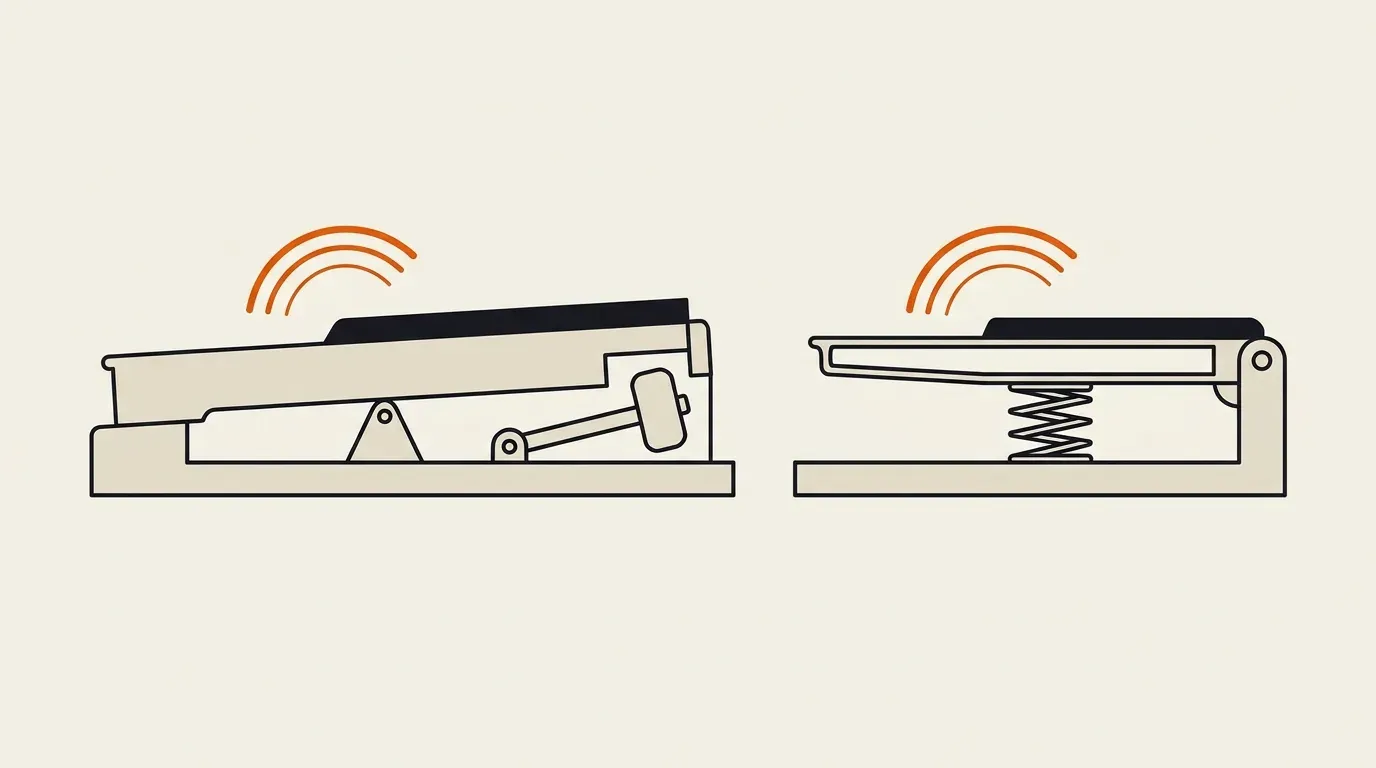
Left: a weighted key moves a hammer-like weight. Right: an unweighted key rests on a light spring.
Unweighted and semi-weighted keys
Most keyboards have light keys on a spring, called unweighted or synth action. Semi-weighted keys use a stiffer spring, so there’s a little more resistance, but they still bounce back like a keyboard.
Light keys suit organ and synth parts, which is why people who play those often prefer them. One r/piano commenter goes further: “I absolutely hate playing weighted keys for organ and synth.”
Touch-sensitive doesn’t mean weighted
Touch-sensitive keys play louder or brighter when you hit them harder, and many keyboards have them. As Yamaha puts it, though, “there is no ‘resistance’ when you depress them.” One r/Learnmusic reply warned a beginner not to let anyone tell them touch sensitivity is good enough for piano.
Touch sensitivity is still worth having on any keyboard. Without it, every note plays at the same volume however you press the key.
61 vs 88 keys, and everything else that differs
Digital pianos almost always have 88 keys, the same as an acoustic. Keyboards usually have 61 or 76, and Yamaha notes they’re sometimes smaller too, so check for “full-size.” Owners on Reddit warn beginners away from mini keys.
Digital pianos tend to have better piano sounds, and Yamaha says that leaves less memory for anything else. Keyboards spread it over far more sounds: Yamaha’s 61-key PSR-E383 lists 650 voices, while the P71 has 10.
Most keyboards can also play drums and a backing band that follows your left hand. The PSR-E473 has 290 of these styles. One r/piano owner can’t find “one finger chords” anywhere on their digital piano, which is typical.
Donner puts keyboards at 8 to 15 pounds and digital pianos at 25 to 45. Many keyboards run on batteries and fit under your arm, while a digital piano like the 25-pound P71 needs a stand or a sturdy table.
Keyboards are usually cheaper too. Donner’s ranges are about $80 to $800 for keyboards and $350 and up for digital pianos. One beginner whose friends insisted on a $1,000 instrument got this reply on r/Learnmusic: “There’s no need to spend $1k.”
Which one should you buy?
Decide by the music you want to play.
Buy a digital piano if you want to play piano
That means lessons, classical pieces, or pop songs on a piano sound, and sitting down at an acoustic someday. Weighted keys give you much better control of how loud or soft each note plays. The r/piano reply we’d pass along is “If you learn on weighted action it will be easier to adjust to non weighted action than the other way around.”
It still makes sense if you never plan to touch an acoustic. One r/piano reader asked exactly that, and a typical reply was “You buy a digital with weighted keys, BECAUSE you don’t have the space for an acoustic one.”
Our guide to the best digital piano for beginners compares five, and it includes the extras you’ll need, since none of them come with a stand.
Buy a keyboard if you want sounds, rhythms or something to carry
A keyboard suits singers who want accompaniment, anyone who likes playing along with a built-in band, people who need to move it around, and young kids who are exploring. As one r/DigitalPiano reply put it: “Kid bashing rhythms and styles and weird sounds? Not weighted is ok.” It’s also fine if you mainly want to work out ideas and write songs. Asked about composing, the top r/piano reply said “the action really shouldn’t matter.”
Look for 61 full-size, touch-sensitive keys at a minimum.
Buy a MIDI keyboard if you want to make music on a computer
A MIDI keyboard makes no sound by itself. It plays software on your computer or tablet, which suits beats and recording. If that’s your goal, see our MIDI keyboards for beginners. The keys are usually unweighted, so it’s a poor choice for piano lessons.
If you already have a keyboard
Start on it. A gifted keyboard won’t hold you back for the first few months, and it’ll show you whether you like playing before you spend more.
Piano players do argue about this. Some warn that you’ll pick up habits you’ll have to undo. The top reply in one 2026 r/piano thread pushed back: “You won’t be learning bad habits. Instead, you will be learning something that is, for all intents and purposes, a different instrument. Some skills will carry over. Some won’t.” Notes, chords and reading music carry over. Control over soft and loud playing is the part that changes, because it depends on the weight of the keys. Hoffman Academy says students who’ve only played a keyboard “may take some time to adjust” to using their hand strength and arm weight on a piano.
The owners we read say that adjustment takes about a week to a month:
- One played a weightless keyboard for a year, and after upgrading their “hands felt strained and tired for a week.”
- Another spent a month on a 61-key keyboard before buying a Roland FP-30X: “an adjustment initially but after a few weeks it became comfortable.”
- A third spent several months on semi-weighted keys, then bought a used Yamaha P-45 and says “it didnt really take that long to get used to the weight.”
Most of them say the switch was worth it. If you’ve made it past the first few months and you’re still playing piano pieces, that’s your sign to upgrade. The free piano chord chart works on either instrument until then.
Ready to pick one?


Questions beginners ask
Is a keyboard the same as a piano?
No. An acoustic piano makes sound with hammers hitting strings, and a keyboard makes it electronically. The notes are laid out the same way, so what you learn about notes, chords and reading music carries over. The keys feel different, though, and on most keyboards they're much lighter.
Can you learn piano on a keyboard?
You can learn the basics: notes, chords, rhythm and reading music. Get one with full-size, touch-sensitive keys. Owners on Reddit say an unweighted keyboard works for the first months, but that you'll want weighted keys once you're past the basics. If you know you want to play piano, it's cheaper to skip the first keyboard.
Weighted vs unweighted keys, what's the difference?
Weighted keys usually have a hammer-like mechanism that pushes back like an acoustic piano. Semi-weighted keys use stiffer springs, so they have some resistance but spring back like a keyboard. Unweighted keys have a light spring and almost no resistance. Touch sensitivity is a separate thing: it changes how loud a note plays, and it can be found on any of the three.
How many keys does a piano have?
A standard piano has 88 keys: 52 white and 36 black, covering just over seven octaves. Digital pianos copy that. Keyboards usually have 61 or 76 keys, and MIDI keyboards can go down to 25 or 49.
61 vs 88 keys, do I need all 88?
For piano, usually yes, and mostly because weighted keys rarely come in anything shorter. For the music itself, 61 keys goes a long way. One r/pianolearning reader says they've played for a year and never needed more.
Is an electric piano the same as a digital piano?
Often, yes. Stores and teachers use "electric piano" for a digital piano. Strictly, though, an electric piano is an instrument like the Fender Rhodes, where real hammers strike metal tines over an electric pickup.
Is a digital piano as good as an acoustic piano?
Not quite. Hoffman Academy, which teaches piano online, calls an acoustic piano the best choice for beginners and an electric piano a good one that costs less and takes up less space. A digital piano also never needs tuning, has a headphone jack, and doesn't take a moving crew to relocate.
Can a digital piano be used as a MIDI keyboard?
Yes. All five pianos in our digital piano guide connect to a computer or tablet over USB, so you can play software instruments and learning apps on weighted keys.