
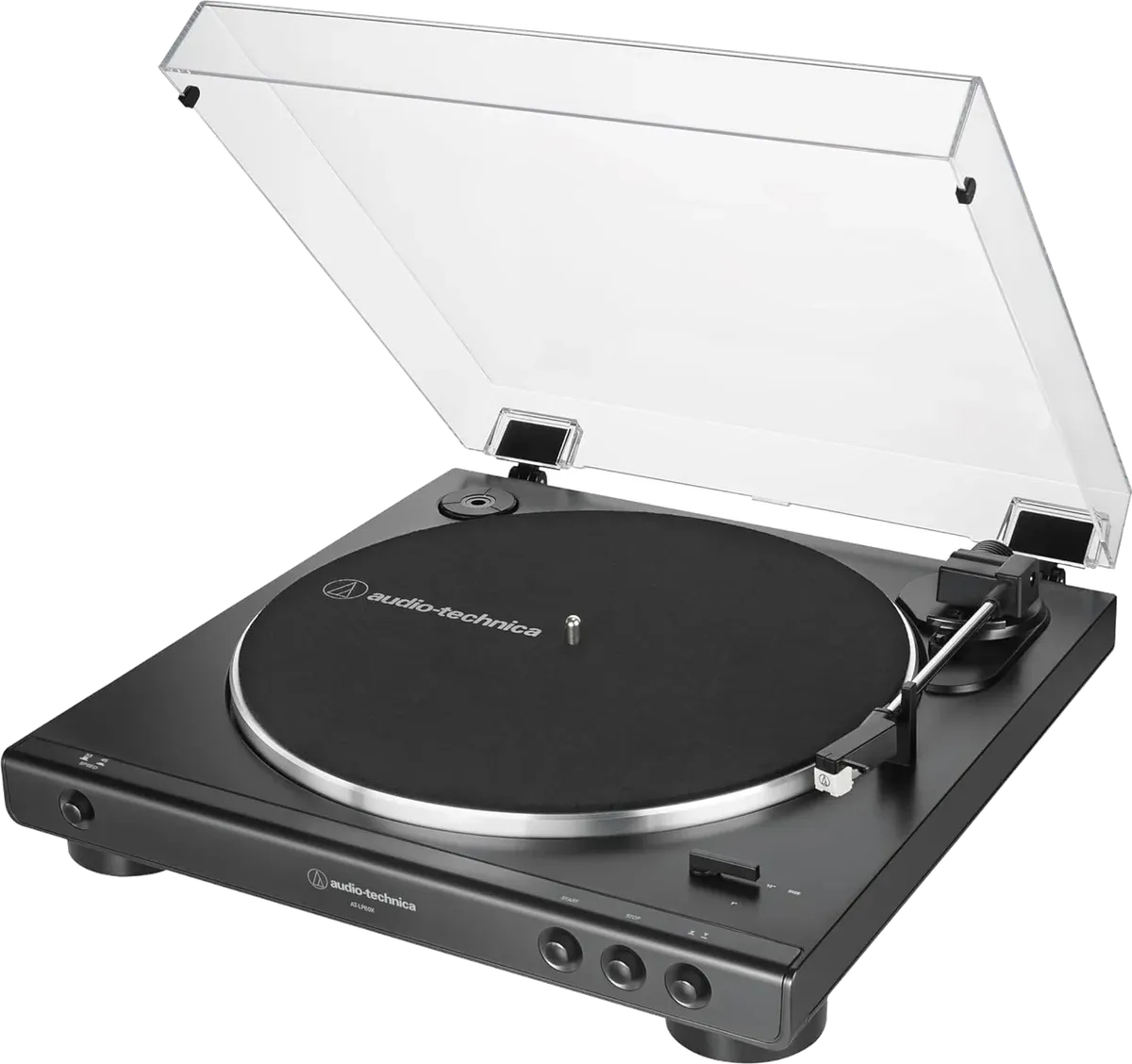
Audio-Technica AT-LP60X
The most-rated turntable here, fully automatic, with a preamp built in so it plugs straight into powered speakers.
Check price on AmazonWhat owners say about setup, sound and the problems that show up months in, and how to choose between an automatic turntable and one you set up by hand.
Heads up: we earn a commission if you buy through our Amazon links, at no cost to you. It never decides our picks. Affiliate disclosure
The most-rated turntable here, fully automatic, with a preamp built in so it plugs straight into powered speakers.
Check price on Amazon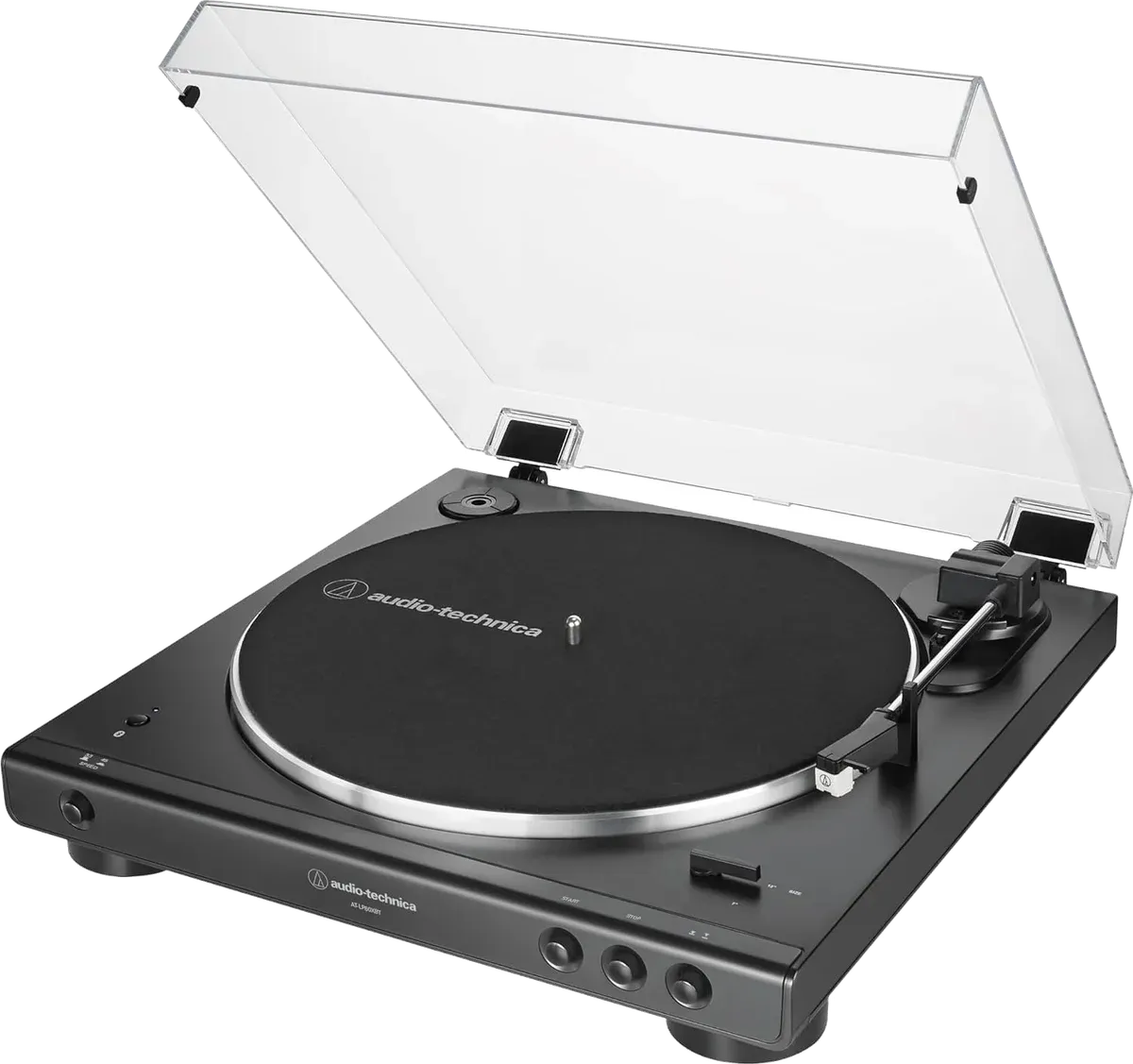
The AT-LP60X with Bluetooth added, so it plays records straight to a speaker, soundbar or headphones.
Check price on Amazon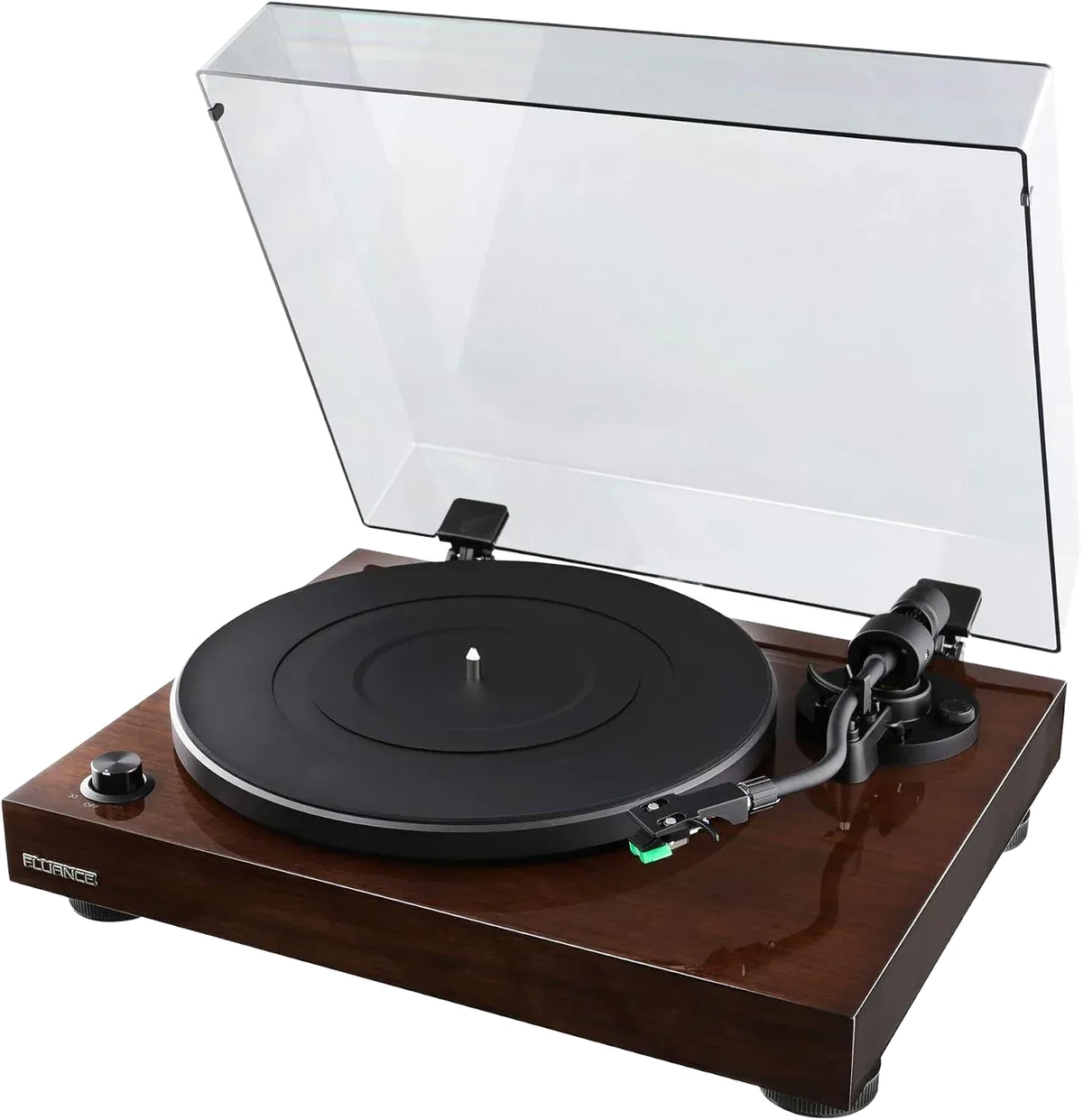
A heavy wood base, a better Audio-Technica cartridge and an arm you balance yourself, with a preamp you can switch off later.
Check price on Amazon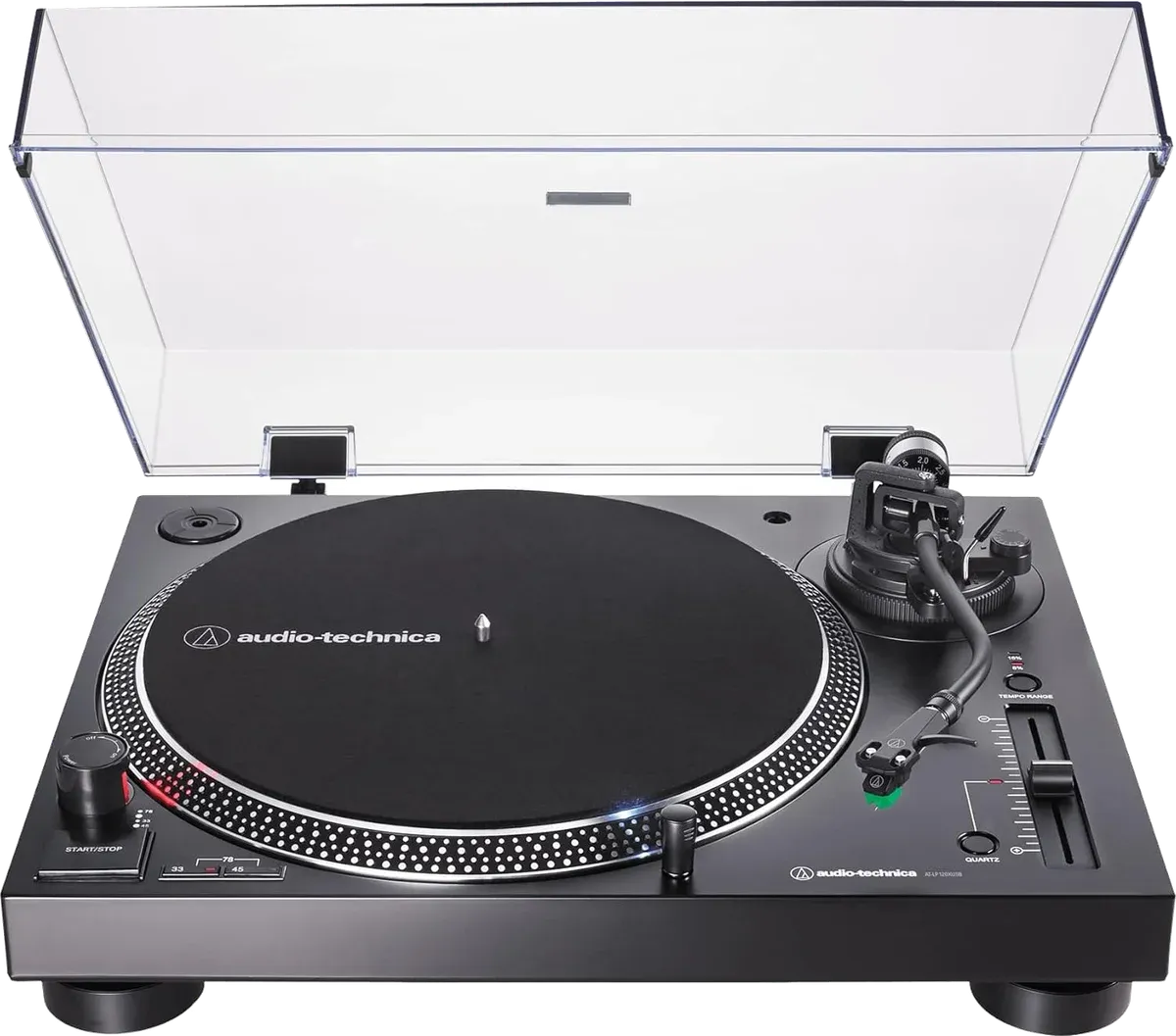
A heavy direct-drive turntable with an adjustable arm, a swappable cartridge, USB recording and a speed lock.
Check price on Amazon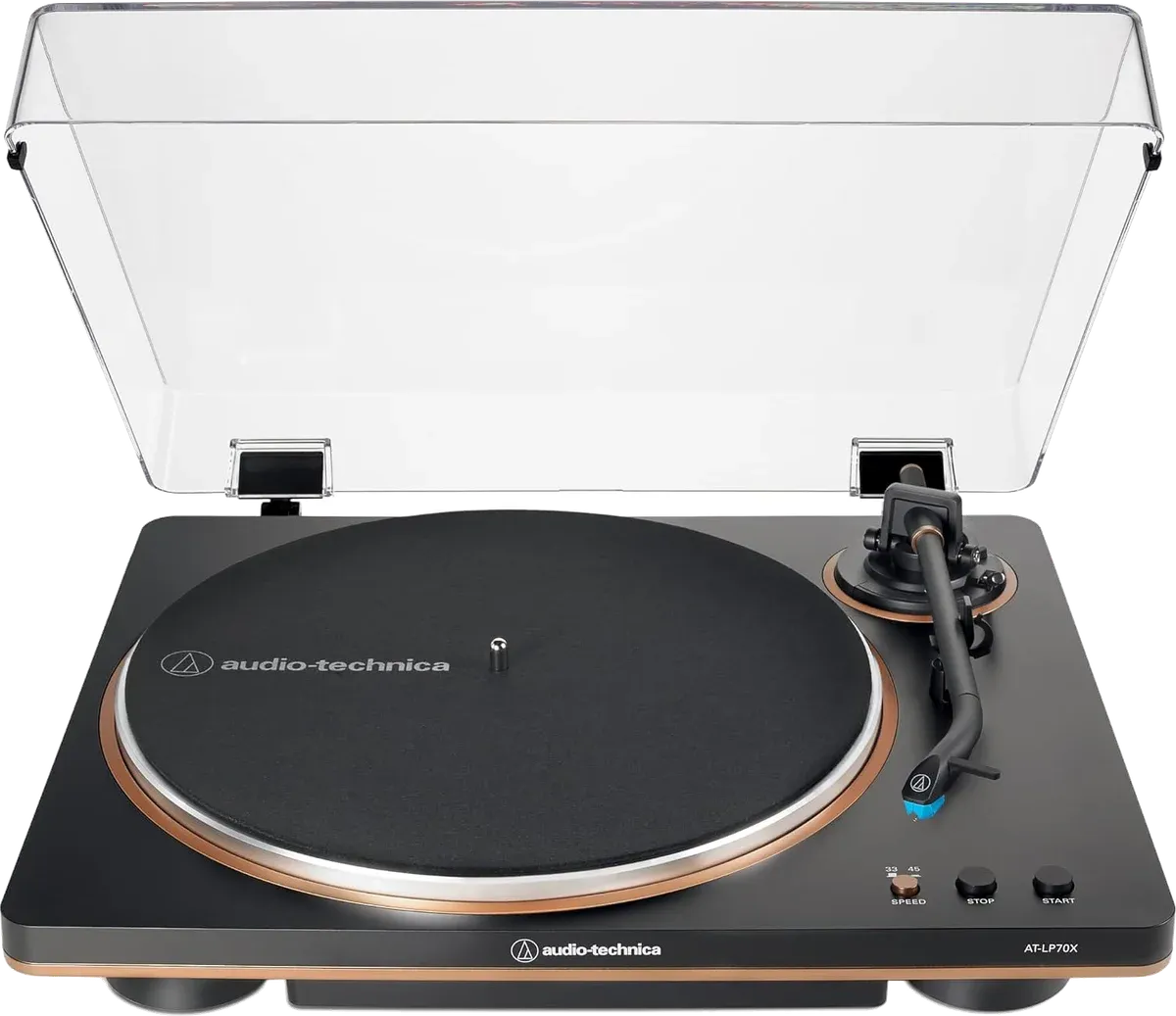
An automatic turntable with a better cartridge you can upgrade, but owners report a run of skipping problems.
Check price on AmazonJump to: Audio-Technica AT-LP60X · Audio-Technica AT-LP60XBT · Fluance RT81 Elite · Audio-Technica AT-LP120XUSB · Audio-Technica AT-LP70X
| Pick | Best for | Operation | Bluetooth | Most-cited gripe | Owner rating |
|---|---|---|---|---|---|
| Audio-Technica AT-LP60X | Most first-timers | Fully automatic | No | Skips on busy records | 4.5 (13,380) |
| Audio-Technica AT-LP60XBT | Bluetooth speaker owners | Fully automatic | Yes, aptX | Fussy pairing | 4.6 (9,074) |
| Fluance RT81 Elite | Better sound on a budget | Manual, auto-stop | No | Speed drift | 4.7 (3,562) |
| Audio-Technica AT-LP120XUSB | Future hobbyists | Fully manual | No | Setup has a learning curve | 4.7 (9,066) |
| Audio-Technica AT-LP70X | Automatic with room to upgrade | Fully automatic | No | Skipping | 4.5 (773) |
Ratings checked on Amazon on October 23, 2026. They change over time.
The verdict: The AT-LP60X is the turntable we'd hand most people buying their first one. It has over 13,000 Amazon ratings and sits near the top of Amazon's turntable best-seller list. It's fully automatic: you press start, the arm moves to the record and drops the needle, and it lifts and returns on its own at the end. Several top reviewers bought it for exactly that reason, so they wouldn't scratch a record or the needle while learning. Five of the eight say setup was easy, and most of it is putting the belt on. It has a phono preamp built in, so it connects to powered speakers with the included cable.
Three of the top reviewers came from a suitcase player or a cheap all-in-one, and all three call the AT-LP60X a big step up. The trade-off is that nothing is adjustable. The arm's weight is set at the factory, and you can replace the needle but not upgrade the cartridge. One owner found the belt step confusing until they watched a video.
Reddit has plenty of LP60X threads. Most are setup questions: speakers that won't play, a needle that comes loose when you pull off its cap, and a platter that won't spin until the arm's shipping tie comes off. A recent thread with over 150 comments is about skipping on new records, and replies say this light arm doesn't track loud, busy music as well as better turntables do. Other threads report start and stop buttons that quit, and speed drifting after a couple of years. The warranty on the Amazon listing is 1 year.
How often each theme comes up across owner reviews and forum threads.
Setup day
Remove the arm's shipping tie and seat the belt on the motor pulley. Set the PHONO/LINE switch on the back to LINE for powered speakers.
First months
If loud passages skip on clean records, check that the turntable is level and away from the speakers.
Years in
Reddit has reports of failed start and stop buttons and speed drift. The listing's warranty is 1 year.
The verdict: If you already own a good Bluetooth speaker or soundbar, the AT-LP60XBT saves you buying speakers. It's the same automatic turntable as the AT-LP60X, with Bluetooth added, and it still has a wired output. Six of the ten top reviewers we read play it over Bluetooth, to a Bose speaker, a JBL Flip, a Polk soundbar, a boombox and a home-theater soundbar. Eight of the ten like the sound. Several say setup took minutes, and three call it a big step up from suitcase and off-brand players.
Pairing isn't always smooth. One owner's boombox wouldn't pair after several tries. It finally worked after they connected headphones first, and it has paired instantly since. Two owners noticed a slight delay when the same record plays over Bluetooth and through wired speakers at once. Another owner, who has worked in the music industry for decades, says the paper instructions are mostly pictures and other languages, and it took a couple of hours to figure out the belt and the needle cap.
It shares the AT-LP60X's limits. The arm can't be adjusted, the cartridge can't be upgraded, and the body is mostly plastic with a light platter that can pick up footsteps. One long, popular review sums it up as a good choice for casual listeners. If you plan to build a hi-fi system piece by piece, that owner suggests starting higher. The warranty on the Amazon listing is 1 year.
How often each theme comes up across owner reviews and forum threads.
Setup day
Install the belt before you play anything, and take the needle cap off gently. If your speaker won't pair, try pairing another device first, then retry.
First weeks
Pick one output. Playing over Bluetooth and wired speakers at the same time puts them slightly out of sync.
Years in
Same mechanism as the AT-LP60X, so the same reports of button and speed faults apply. The listing's warranty is 1 year.
The verdict: The RT81 is for beginners who want better sound and don't mind a little setup. It has a heavy MDF wood base, an Audio-Technica AT95E cartridge with an elliptical needle, and a tonearm with a counterweight you balance yourself. Six of the eight top reviewers say it sounds better than its price, and one says it holds up against pricier Pro-Ject and U-Turn models. Five mention how solid and heavy it feels. The preamp is built in and can be switched off, so you can add a better external one later.
It's semi-manual. You lift the arm and set it on the record yourself, and the platter stops at the end, but the arm stays down. Two owners wish it lifted the arm too. Balancing the arm takes care: one owner missed a step and got it right on the second try, and another says setup is not for people without patience. Four call the instructions clear.
The main complaint is speed. The most-helpful critical review, from 2017, measured the platter drifting between 32.8 and 33.5 RPM, enough to hear on piano and orchestral records, and the speed screws are under the base. A Reddit owner mentions hearing about speed issues down the line. Fluance's support gets praise: it sent one owner a free replacement cartridge, and the warranty is 2 years. Fluance says Ortofon replacement styli don't fit this arm.
How often each theme comes up across owner reviews and forum threads.
Setup day
Balance the tonearm and set the tracking force step by step from the manual. Fluance's videos help.
First months
If records sound slightly wavy or off-pitch, check the speed with a phone app. The adjustment screws are under the base.
Years in
Owners upgrade the stylus or add an outboard preamp. The warranty is 2 years.
The verdict: The AT-LP120XUSB is the one to buy if you think vinyl will become a hobby. It's fully manual, with a direct-drive motor, a counterweighted arm with anti-skate, and a removable headshell that takes almost any cartridge. One owner has run five different ones on it. Five of the ten top reviewers we read call it heavy and well made, seven praise the sound, and three say the motor is silent and the speed rock-solid. One measured it at 33.2 to 33.3 RPM after 27 months. It also has a USB output for recording records to a computer.
It's not the easiest first turntable. A top reviewer with 143 helpful votes says beginners who don't know how to balance a tonearm, or are afraid of dropping the needle onto the platter, may want to skip it. Another owner set the anti-skate but forgot the counterweight, and the arm kept swinging away until they fixed it. Most found setup easy once they watched Audio-Technica's video. There's no auto-stop, so the needle keeps riding the end groove until you lift it, and two owners wish it had one.
A hi-fi repair tech who gave it two stars says the tonearm lift started dropping too fast after a year, and they hear distortion near the end of each side. They call the built-in preamp weak, and say the build is lighter than older LP120 models. The same owner says tracking is rock solid and the turntable is very reliable. Another owner says the cue lift nudges the arm sideways a little. The warranty on the Amazon listing is 1 year.
How often each theme comes up across owner reviews and forum threads.
Setup day
Balance the arm to zero first, then set the counterweight to the cartridge's tracking force, then match the anti-skate. Watch Audio-Technica's setup video.
First months
Lift the arm at the end of each side. There's no auto-stop.
Years in
One owner's cue lift started dropping fast after a year. Long-term owners upgrade the stylus or add an outboard preamp.
The verdict: The AT-LP70X is Audio-Technica's step up from the AT-LP60X. It's still fully automatic and needs no arm setup, but it adds the VM95C cartridge, which takes any stylus in the VM95 range, so you can upgrade the sound later. It also adds a sturdier chassis and an arm lock. The top reviewers like it: four call it easy to use, five like the sound, and three mention the upgradeable stylus.
Two of the eight top reviewers report skipping. One owner's unit started skipping on several records after nearly a year. Audio-Technica called it a known issue, covered it under warranty, and sent a new turntable in 10 days. Another owner got two units in a row that looped the same second or two halfway through a record. On Reddit, one thread is titled "What is going on with the LP70x?" over a surge of skipping posts, and others are titled "Giving up on my AT-70X due to skipping issues" and "Are the AT-LP70X's issues fixed?"
Not every unit has it. One owner of the Bluetooth version says theirs has never skipped, and owners trade home fixes like a thicker mat. It also has far fewer ratings than the AT-LP60X, 773. The warranty is 2 years, a year longer than the LP60X listing's, and skipping owners have used it.
How often each theme comes up across owner reviews and forum threads.
Setup day
Put it on a hard, level surface. One owner cut noise with a record weight.
First months
Skipping or looping on clean records is the fault owners report. Contact Audio-Technica within the warranty.
Years in
One owner's skipping started near the one-year mark and was fixed under the 2-year warranty.
A first setup is a turntable, a pair of speakers and some records. The main choices are how hands-on you want to be and what you’ll play it through.
If you just want to put on a record and sit down, buy an automatic turntable. The AT-LP60X, AT-LP60XBT and AT-LP70X drop the needle and lift it at the end with a button press, and there’s nothing to adjust. The Fluance RT81 and AT-LP120XUSB are manual. You balance the arm with a counterweight when you set it up, and you lower the needle yourself with a lever. Owners say a setup video helps, and in return you get better parts you can upgrade.
Turntables don’t have speakers. All five picks have a preamp built in, so a pair of powered speakers plugs straight in with the included cable (see our powered speakers for turntables). Our guide to connecting a turntable to speakers covers every other setup, from a receiver to a soundbar. If you already own a good Bluetooth speaker or soundbar, the AT-LP60XBT plays to it with no extra purchase, though one owner says Bluetooth costs some sound quality.
The cheapest record players have the speakers built into the case. Owners on Reddit say they sound bad and wear records faster. If you’re spending money on new vinyl, a real turntable protects it. Several owners we read upgraded from a suitcase player and call the difference big. Our turntable vs record player explainer covers why, and how much of the record-damage worry holds up. If you still want the speakers in the box, our record players with speakers guide has the ones worth buying.
Put the turntable on a solid, level surface, and keep the speakers off that surface if you can. A needle picks up vibration, so speakers on the same shelf can cause skipping and a low howl at higher volume. Footsteps on a springy floor can do the same with lighter turntables like the AT-LP60X.
Today people use the two words for the same thing. If anything, "record player" often means an all-in-one with built-in speakers, like a suitcase player, while "turntable" means just the deck, which you connect to speakers. Every pick here is a turntable, so plan on a pair of speakers too.
Of the five here, the AT-LP60X. It's the most-rated, fully automatic, and its built-in preamp plugs straight into powered speakers, so you don't need anything else between them. If you want to play records on a Bluetooth speaker or headphones, the AT-LP60XBT is the same turntable with Bluetooth added. Cheaper suitcase players with speakers in the case cost less, but owners say they sound worse and wear records faster.
The AT-LP60X. On Amazon it usually sells for a bit under $200, it's the most-rated turntable here, and it needs nothing but a pair of powered speakers. Prices move a lot around the holidays, so check the current one before you buy.
A turntable can't be much smaller than a 12-inch record plus its arm. The AT-LP60X and AT-LP60XBT measure about 14.2 by 14.7 inches, and the AT-LP70X (6.4 lb) and AT-LP60X (8.1 lb) are the lightest picks here. The bigger space saver is the speakers: the AT-LP60XBT plays through a Bluetooth speaker you already own, so you don't need a pair of bookshelf speakers on the same shelf.
Owners on Reddit mostly agree that cheap suitcase players press harder on the grooves and wear records faster, and that they sound worse. They don't ruin a record on the first play, so there's no need to panic if you own one. Several AT-LP60X and LP60XBT owners we read upgraded from one and call it a big difference.
Not with these five. Each has one built in, with a PHONO/LINE switch on the back. Set it to LINE when you plug into powered speakers or a receiver without a phono input. If your receiver has a PHONO input, set the turntable to PHONO instead, so you don't run two preamps at once. You can add a better external preamp later on the RT81 and AT-LP120XUSB.
An automatic turntable places the needle and lifts it at the end for you. It's the safest choice if you're nervous about scratching a record, and several owners bought the AT-LP60X for that reason. Manual turntables like the AT-LP120XUSB make you balance the arm and lower the needle with a lever. That takes a bit more care, but you get adjustable parts and room to upgrade.
The needle, or stylus, wears out with use and is the part you replace, not the whole turntable. All five picks take a replacement stylus, and the AT-LP70X and AT-LP120XUSB can take upgraded ones from Audio-Technica's VM95 range. One Fluance RT81 owner traced skipping on old records to the factory stylus, and a replacement Fluance sent fixed it.